How Much Water to Drink on Keto (And Why)
How much water should you drink on keto?
A reasonable general target is about 2.5 to 3.5 litres a day, scaled up for a larger body, hot weather or hard exercise — but the honest answer is to drink to thirst and keep your urine pale. Keto drains water fast because glycogen holds roughly three times its weight in it, so both intake and electrolytes matter. Volume without minerals is the mistake that keeps people cramping.
- Why it drains: each gram of glycogen releases about 3 g of water when burned.
- How much: roughly 2.5–3.5 L/day, adjusted for size, heat and activity.
- The catch: plain water without sodium can dilute you and worsen cramps.

Why keto empties you out so fast
The dramatic weight loss of the first keto week is almost entirely water, and the mechanism is worth understanding because it explains both the whoosh on the scale and the fatigue that follows. Your body stores carbohydrate in the muscles and liver as glycogen, and glycogen is not stored dry. Every gram of it is bound to roughly three grams of water. When you cut carbohydrate, you deplete those glycogen stores over the first days — and all the water that was held with them is released and excreted.
For an average adult that can mean losing one to two kilograms of pure water in the first week, which is why keto feels like it works so fast and why the loss stalls once glycogen is gone. It is real weight leaving the body, but it is not fat, and it comes straight back the moment you eat carbohydrate again and refill the glycogen. Understanding this early saves a lot of later panic when the scale rebounds after a single high-carb meal.
Layered on top of the glycogen effect is the insulin one. Cutting carbohydrate lowers insulin, and low insulin signals the kidneys to excrete sodium — with more water following it out. So you are losing fluid by two routes at once, which is why the early days can leave you genuinely dehydrated and short on minerals at the same time.
So how much should you actually drink?
The tidy number people want is roughly 2.5 to 3.5 litres a day for most adults on keto, a little above the general population guidance because your losses are elevated. But a fixed number is a weak tool, because your real needs swing with body size, air temperature, altitude and how much you sweat. A 60-kilogram office worker in a cool climate and a 95-kilogram person training in the heat are not on the same target, and no single figure serves both.
Two body signals beat any number. The first is thirst — an underrated, well-calibrated system that is worth trusting rather than overriding. The second is the colour of your urine: pale straw is the goal, dark yellow means drink more, and completely clear all day can actually mean you are over-drinking. Use the litre figure as a starting estimate, then let thirst and urine colour do the fine-tuning. Front-load a little in the morning and around exercise, and ease off in the evening so hydration does not cost you sleep.
Drink to thirst, aim for pale-yellow urine, and remember that on keto the water is only doing its job if it arrives with minerals. Litres alone are half the answer.
The mistake: chasing volume, ignoring minerals
Here is the part that surprises people, because it runs against the "just drink more water" reflex. On keto, over-drinking plain water can make you feel worse, not better. Since the diet has already pushed your sodium down, pouring in litres of mineral-free water dilutes the sodium you have left — a mild, self-inflicted version of the low-sodium state athletes hit when they over-hydrate. The symptoms look exactly like the ones people are trying to fix: headache, light-headedness, fatigue and muscle cramp.
This is the single most common hydration error on keto. Someone feels rough in week one, reads that they should hydrate, drinks three or four litres of plain water, and feels rougher — then concludes the diet does not suit them. The fault was never the water; it was water without the minerals it needed to travel with. The fix is not to drink less. It is to make sure sodium, potassium and magnesium come along with the fluid — through salted food, broth, or an electrolyte drink — so the water is actually retained and used instead of flushing you out further.
Does more water speed up weight loss?
This is worth answering plainly because the internet oversells it. Drinking more water does not make you burn more fat. There is no metabolic switch that fat loss flips faster when you are well-hydrated versus adequately hydrated. The enormous early drop on the scale is glycogen water leaving, not fat, and no amount of extra drinking changes the fat-loss maths, which is still governed by energy balance.
What water does do is more modest and still worth having. Being adequately hydrated supports normal energy, concentration and exercise performance, all of which make it easier to stick to the plan. There is also reasonable evidence that a glass of water before a meal slightly reduces how much people eat, which can help at the margins. And staying hydrated helps with the constipation that a sudden change in fibre and fluid can bring. Useful, real, but a support role — not a fat-burning lever, and not a reason to force litres past the point of thirst.
A simple, honest hydration routine
Start the day with a large glass of water that has a pinch of salt or a scoop of electrolytes in it, especially in the first two weeks when losses are highest. Keep a bottle within reach and sip across the day rather than gulping litres in one sitting. Add extra around exercise and on hot days. Salt your food to taste — on keto that is a feature, not a vice. And check your urine colour once or twice a day as a free, reliable gauge. That routine covers both halves of the problem: enough fluid, and the minerals that make the fluid count.
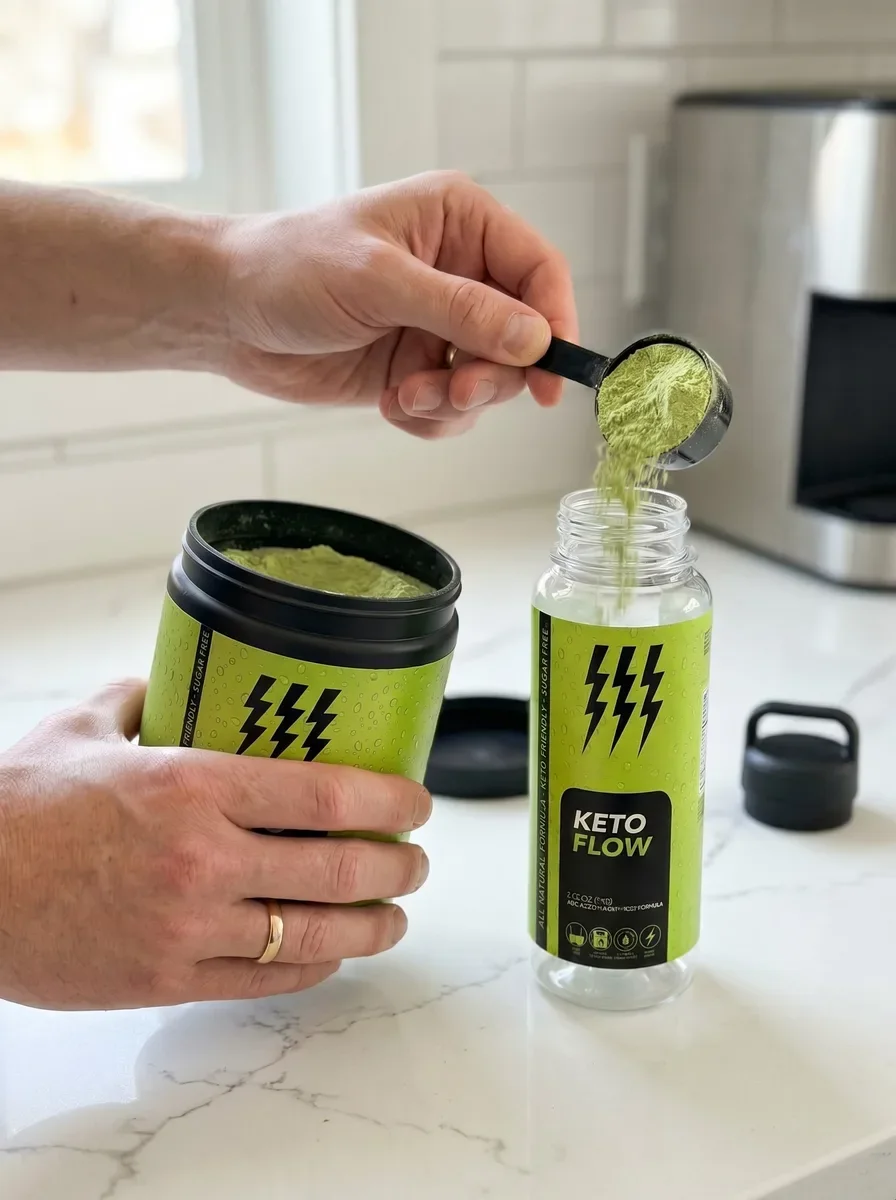
A powdered keto drink like KetoFlow fits this neatly because it turns a glass of water into a mineral-carrying one — its BHB is delivered as a sodium, calcium and magnesium salt, so the electrolytes dissolve in with the fluid. Whether the per-scoop dose is enough to replace deliberate salting depends on amounts the manufacturer does not publish, so treat it as one tool alongside salting your food, not a replacement for it.
Turn your water into keto hydration
KetoFlow's BHB comes as a sodium, calcium and magnesium salt, so the minerals dissolve into the glass you are already drinking. Our main page reads all six ingredients, with every undisclosed amount marked.
Order NowFrequently asked questions
Why do you lose so much water on keto?
Because carbohydrate is stored in your muscles and liver as glycogen, and every gram of glycogen is bound to roughly three grams of water. When you cut carbs, you burn through that glycogen and release the water with it. Lower insulin also tells the kidneys to shed sodium and fluid, which is why the first days of keto empty you out so fast.
How much water should I drink daily on keto?
A common general guideline is around 2.5 to 3.5 litres a day, adjusted upward for body size, hot weather and exercise. The more reliable guide is your body: drink to thirst and check your urine is pale yellow. Volume alone is not the target — the water needs to arrive with sodium, potassium and magnesium to actually help.
Can drinking too much water hurt on keto?
Yes, in a specific way. Because keto already lowers your sodium, drinking large amounts of plain water can dilute what sodium you have left, which can worsen cramps, headaches and light-headedness rather than fixing them. The answer is not less water but water plus electrolytes — and not forcing litres beyond thirst.
Does more water speed up keto weight loss?
Not directly. Drinking more water will not make you burn more fat, and the dramatic early drop on the scale is water leaving with glycogen, not fat loss. Adequate hydration supports appetite, energy and normal function, and a glass of water before meals can modestly reduce intake — but water is a support, not a fat-burning lever.